Thermal Imaging: See What the Eye Can’t
Thermal imaging uses infrared technology to detect temperature variations that reveal hidden issues beneath surfaces. When deployed by drone, thermal inspections cover large areas quickly without ladders, lifts, or dismantling materials.
We are Certified Infrared Thermographer certificate# 1001114 expires 2028
Cape UAV’s thermal imaging is used to detect:
Moisture intrusion and trapped water
Insulation voids and energy loss
Electrical overheating and failure points
HVAC inefficiencies
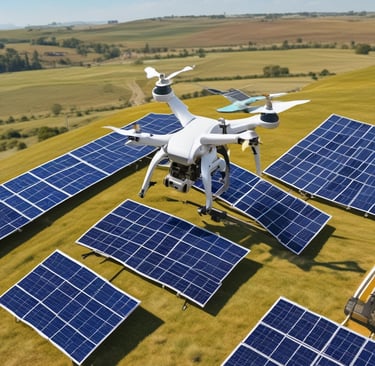
Underperforming solar panels
Why Thermal Imaging Matters
Most costly property and equipment failures begin as invisible issues that go undetected by the naked eye. Thermal imaging technology allows these hidden problems to be identified early—before they escalate into expensive repairs, operational downtime, or insurance claims.
By capturing temperature variations across surfaces and systems, drone-based thermal imaging reveals heat loss, moisture intrusion, electrical faults, insulation gaps, and mechanical inefficiencies that traditional inspections often miss. Early detection enables property owners, facility managers, and contractors to take corrective action proactively, reducing risk, extending asset life, and protecting long-term investments.
Thermal imaging transforms uncertainty into actionable insight, helping you address problems at their source rather than reacting after damage has already occurred.
Return on Investment
One prevented roof replacement, electrical fire, or solar performance failure can save tens of thousands of dollars. For most clients, thermal imaging pays for itself after a single avoided failure.
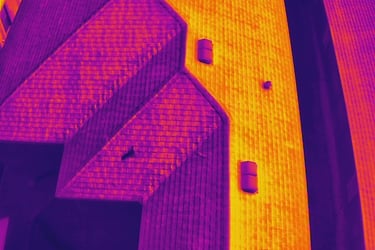
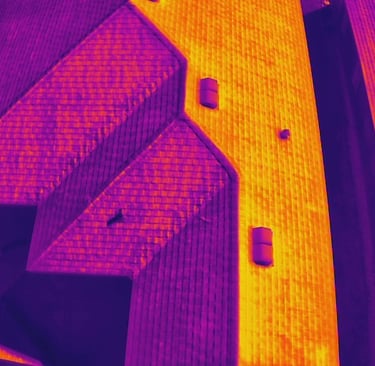
Thermal roof inspections provide a non-invasive way to detect damage without removing materials or climbing on the roof. Using infrared imaging, we can locate:
Hidden moisture intrusion
Insulation voids
Trapped water beneath the surface
Structural heat loss
Storm and wind damage not visible to the eye
Why It Matters:
Moisture and insulation failures often go undetected until major damage occurs. Thermal imaging finds these problems early — before they lead to mold, rot, or expensive structural repairs.
ROI Advantage:
One thermal scan can prevent tens of thousands of dollars in future roof replacement costs while minimizing insurance claims and liability exposure.
Thermal Imaging for Roof Inspections
Thermal Imaging for Solar Panel Inspections
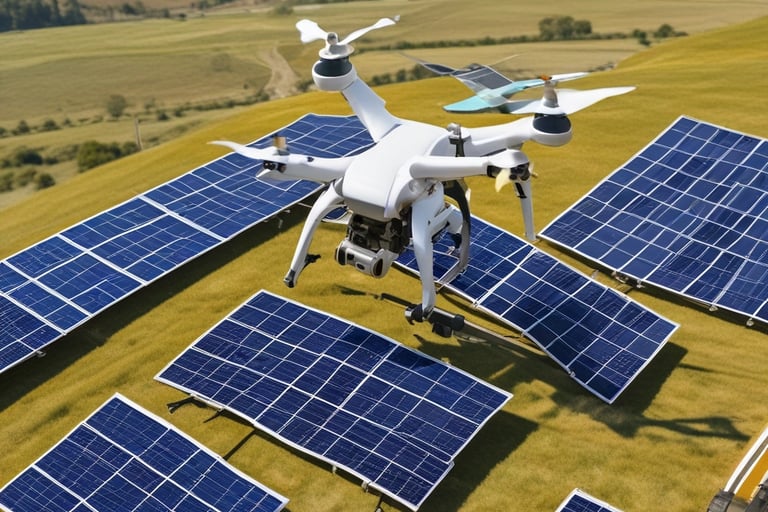
Solar panels depend on perfect electrical flow. Thermal imaging allows us to detect faulty, underperforming, or failing panels by identifying hotspots and irregular temperature patterns.
Thermal Detects:
Defective cells
Electrical faults
Loose connections
Inverter issues
Shaded or underperforming sections
Why This Matters:
Even one failing panel can reduce system performance across an entire array.
ROI Advantage:
Thermal inspections support energy efficiency, protect your solar investment, and help maintain peak power output year-round.
Advanced Radiometric Reporting Add-On
For projects requiring quantitative temperature analysis, we offer radiometric data extraction:
Spot Temperature Measurements: Precise readings at specific points.
Area Analysis: Reporting on minimum, maximum, and average temperatures.
Note: Thermal imagery shows surface temperature differences and may indicate anomalies; results vary by site conditions and it is not a substitute for evaluation by a licensed professional.
Contact:
Email:
Phone:
(239) 899-0648
© 2026. All rights reserved. Website by MindBotics